Whole House Reverse Osmosis vs. Under-Sink Reverse Osmosis: Which System Is Right for Indio Homeowners?
Quick Summary: Indio homeowners face challenges like hard water, chlorine, and potential contaminants from the Coachella Valley Aquifer. Whole house reverse osmosis systems provide complete protection across every tap and appliance, while under-sink RO systems offer a cost-friendly way to improve drinking and cooking water. The right choice depends on your water quality goals, budget, and home size.
For Indio homeowners, choosing between a whole house reverse osmosis system and an under-sink reverse osmosis system isn’t always straightforward. Each option delivers clean, filtered water—but the scale, cost, and purpose of each system are very different.
In this guide, we’ll help you decide which reverse osmosis system is the better fit for your Indio home by comparing the two side by side and outlining key decision factors like tap water quality, installation, and long-term use.
What’s the Difference Between the Two Systems?
Both whole house reverse osmosis (RO) and under-sink reverse osmosis systems use the same core filtration process—forcing water through a semipermeable membrane to remove tap water contaminants like lead, nitrates, PFAS, and chlorine. The difference lies in how much water they treat and where in your home they operate.
- Whole House RO Systems filter all the water entering your home via the main water line, including what you use for laundry, showers, toilets, and outdoor spigots.
- Under-Sink RO Systems treat water at a single point of use, typically the kitchen sink or a dedicated faucet.
Pros and Cons of Whole House Reverse Osmosis
Pros:
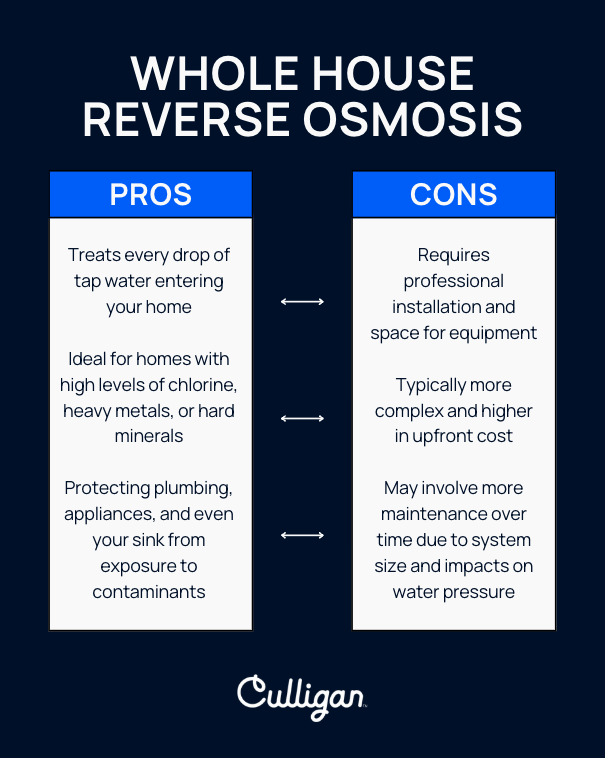
- Treats every drop of tap water entering your home
- Ideal for homes with high levels of chlorine, heavy metals, or hard water minerals
- Protects plumbing, appliances, and even your skin from exposure to contaminants
Cons:
- Requires professional installation and space for equipment
- Typically more complex and higher in upfront cost
- May involve more maintenance over time due to system size and impacts to water pressure
Pros and Cons of Under-Sink Reverse Osmosis
Pros:
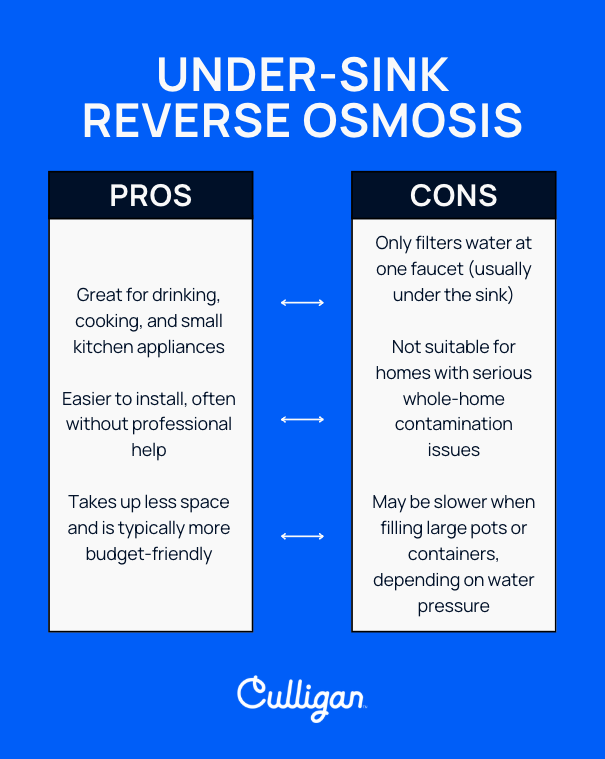
- Great for drinking, cooking, and small kitchen appliances
- Easier to install, often without professional help
- Takes up less space and is typically more budget-friendly
Cons:
- Only filters water at one faucet (usually the kitchen sink)
- Not suitable for homes with serious whole-home contamination issues
- May be slower when filling large pots or containers, depending on water pressure
Indio Water Quality Considerations
Indio’s water primarily comes from groundwater sources in the Coachella Valley Aquifer. While this aquifer supplies much of the region with safe drinking water, residents often face:
- Hard water: High levels of calcium and magnesium contribute to scale buildup in plumbing, appliances, and water heaters.
- Chlorine and disinfectant byproducts: Used by local water utilities to control bacteria but can impact taste and smell.
- Contaminants in trace amounts: Nitrates, arsenic, PFAS, and even heavy metals may appear depending on your neighborhood’s water distribution system.
For Indio households, this means water treatment choices matter. If you want peace of mind that every tap and appliance is protected, a whole house RO system offers comprehensive coverage.
If your main concern is improving the taste and safety of your tap water for drinking and cooking, an under-sink system may meet your needs.
How to Choose: Key Factors to Consider
Water Quality Goals
If you’re looking to protect your entire home from contaminants—including those that affect bathing, laundry, and cleaning—a whole house RO system is the better fit. If you’re primarily concerned with drinking and cooking water, an under-sink RO system may be enough.
Cost Considerations
Whole house systems represent a bigger investment—not just in equipment but in installation and maintenance. Under-sink systems are more accessible for homeowners on a tighter budget or those living in smaller homes or condos.
Installation and Maintenance
Under-sink systems are easier to install and maintain. Whole-house systems often require permits, professional installation, and more routine upkeep due to their complexity. Some pair well with UV disinfection for added peace of mind.
Specific Contaminant Concerns
Both systems effectively remove contaminants such as arsenic, lead, nitrates, and PFAS. For families with newborns or immunocompromised members, even an under-sink system can provide reliable drinking water protection.
Environmental Considerations
Both systems reduce reliance on single-use bottled water. While RO does waste a small amount of water during filtration, it still helps cut plastic waste and ensures you know exactly what’s being filtered. This is especially important in Indio, where water quality varies based on groundwater conditions and treatment processes.
Which Reverse Osmosis System Is Right for Your Indio Home?
If you’re looking for total water protection—across showers, faucets, laundry, and appliances—a whole house reverse osmosis system gives you unmatched coverage.
But if you’re focused on clean, great-tasting drinking water, an under-sink RO system is a practical and reliable solution for Indio homeowners.
The right system depends on your goals, home size, and water quality. If you’re unsure? A free water test is the best place to start.